15 February 2007
Kaupunki
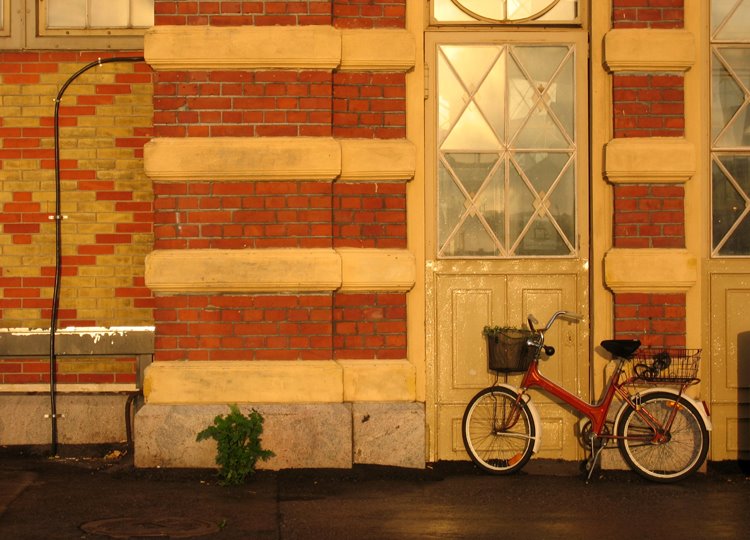
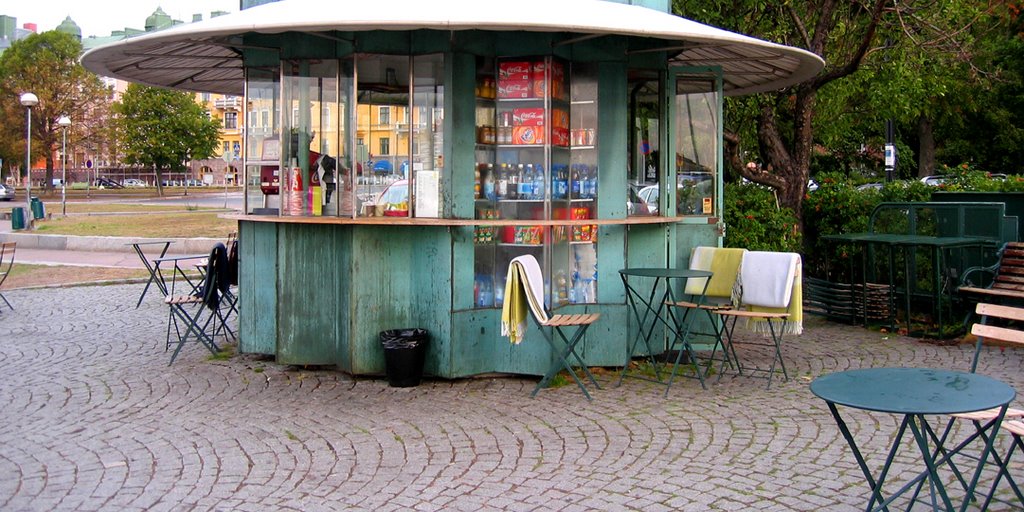
With so many surfaces for my eye to caress, the city shows me something new each day and over time it reveals me to myself. What I once thought overwrought I now find beautiful and what I didn’t like or disagreed with has new resonance with me as I change and familiar things persist. The city and I are like lovers; by noticing things our intimacy grows and we possess one another. It shows me who I am and who I might be and who I am here.


09 February 2007

Talvi


In spite of the sun’s rapid return winter has finally come.


Joulu
December 20, 2006


December has been unseasonably warm and well, dark. You can miss an entire day if you’re not watching for it and in spite of the eternal nocturne I can’t sleep. I wait until after


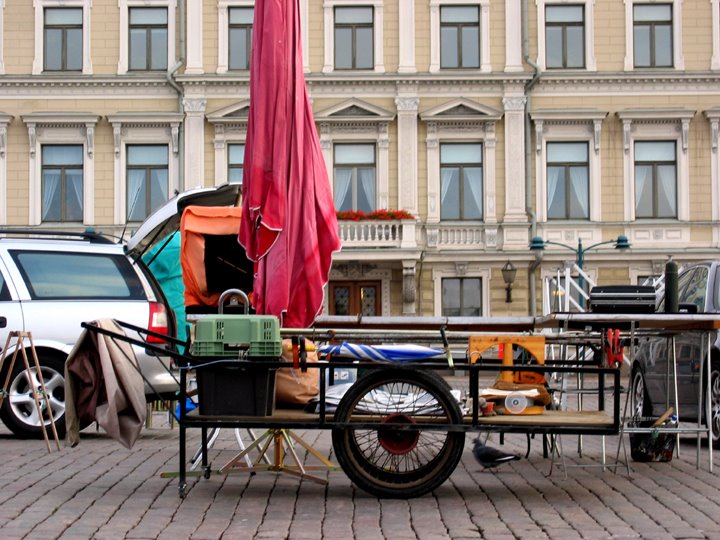
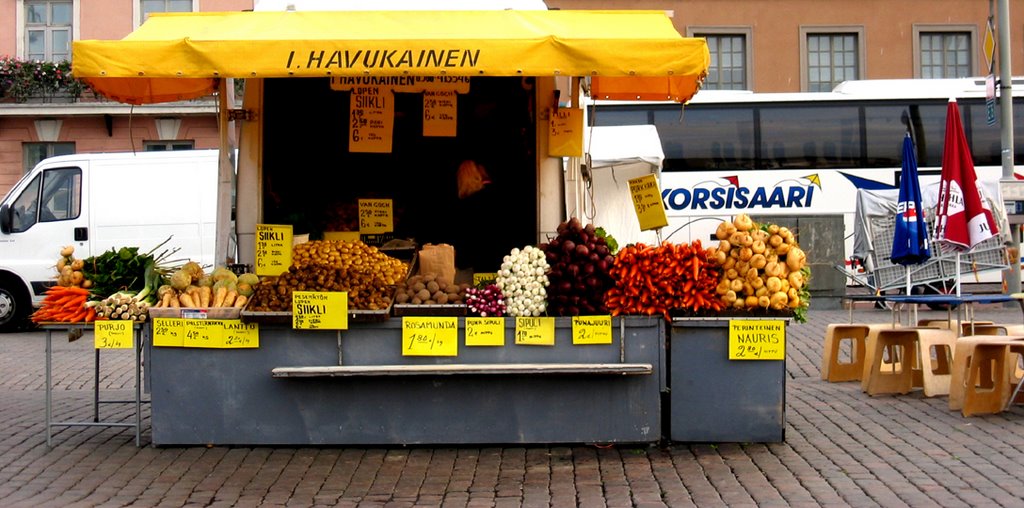
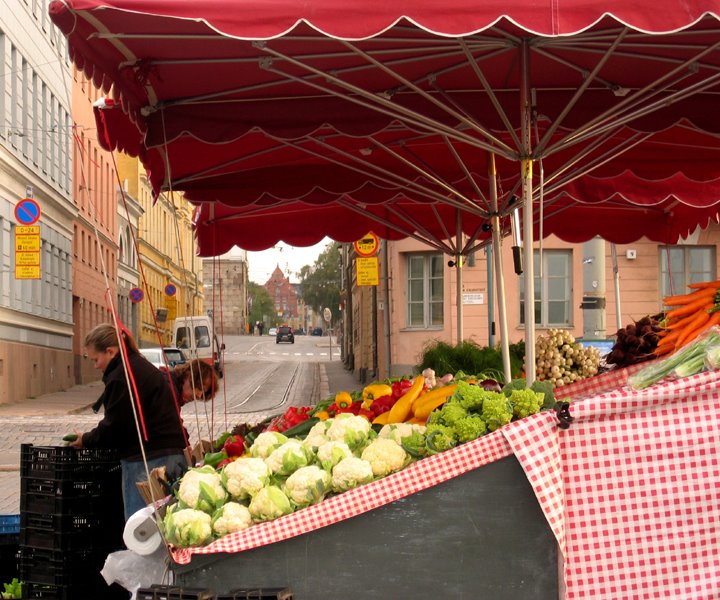
The Christmas market fills

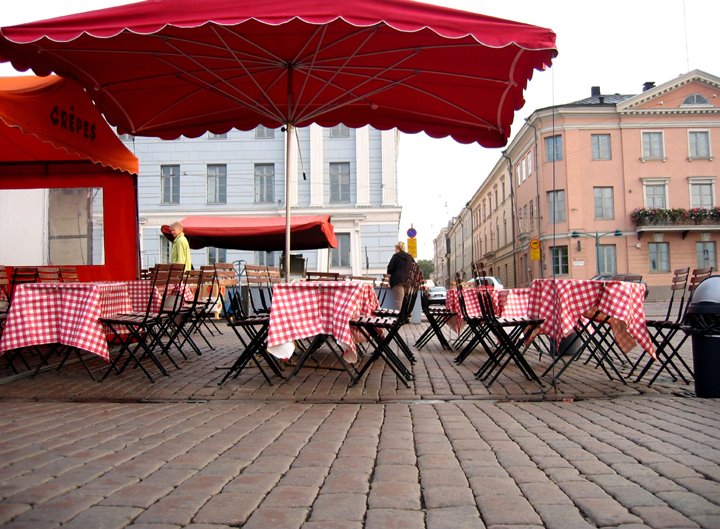
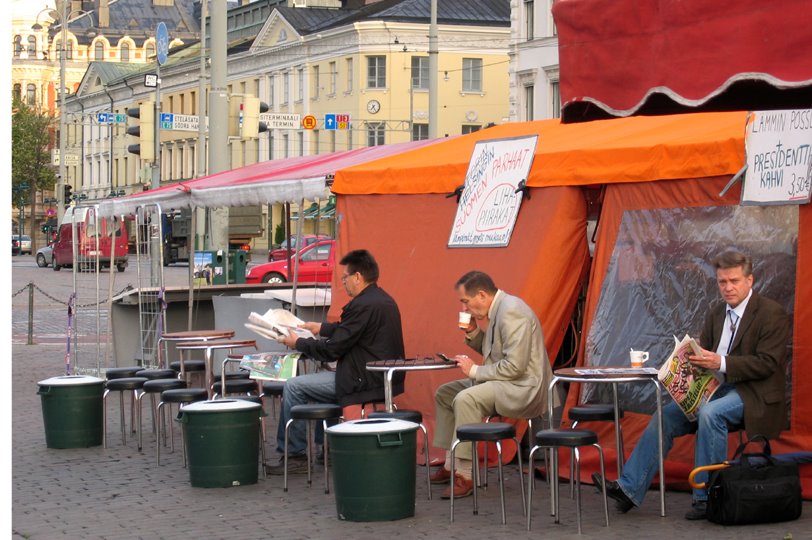
Deepfried sardines, giant pancakes with berries and cream, cloudberry syrup and the most amazing honey…and of course, lots and lots of hot coffee. Everyone is very friendly and they’re happy to talk to you, barely pausing even after you tell them you don’t speak Finnish. Still somehow you can make sense of it. I pass through the market almost every day on my way to and from Juhani’s office just to peek into all of the little booths. Christmas in
08 February 2007
Matter & Form
December 13, 2006
Last night I heard Juhani Pallasmaa lecture for the first time. I was at his office working in the afternoon and he suggested that we ride together to the university so that we would have a chance to talk on the way. He has been preparing a biography on a late painter and close friend for an upcoming retrospective exhibition—a rushed project that has left him time for little else. As it turns out, this very thoughtful and meditative man is a rather aggressive driver. He seemed surprised that we made it there so quickly.
His lecture was on matter and form and from the first word I was spellbound. I’ll try here, as best as I am able to recount the highlights.


He began by recalling Bachelard’s distinction between the material and the formal imagination, explaining that where matter dominates things tend to become primitive and clumsy and unarticulated. Where form dominates they tend toward kitsch and sentimentality. He illustrated his point with two images; the first of Michelangelo’s famous Pieta, the second of his lesser known and unfinished Rondanini Pieta. He boldly called the former kitsch, explaining that marble too easily became skin, that one only saw the form; the matter had been lost. But the second unfinished Pieta had a tragic quality as a result of the unresolved struggle between the stone and the form that was only beginning to emerge from it.
He told us that Adrian Stokes, in his book The Image in Form, speaks of carving and molding. Carving, he said is subtractive and reveals what is hidden in the material while molding is additive and builds up the image. He said that thinking too is either additive or subtractive—an interesting idea that made me think of the epistemological shift from deductive to inductive reasoning. To these categories Juhani added a third: constructing. It is neither carving nor molding but is closer to the latter. This, he said is what architects do. Architects must go between carving out and building up as they imagine space and then configure its construction. He showed images of Indian temples cut out of solid rock and said that there was an extraordinary power in environments made of one material or where the material and form are so like the landscape that it becomes impossible to say where one begins and the other ends. I immediately thought of


He continued, showing two images, the first of a modern functionalist home, the second a photograph of a ruined interior, burnt out and water soaked with vestiges of furniture strewn about. He explained that images of chaos, erosion or lack of order were evocative, that these poetic images open imagination, while commercial or political images ask only for complicity and effectively shut imagination down. He showed pictures of the interior of a chimney-less hut, reconstructed here in

He recounted his own experience at the temple at Karnac where there was such a fusion of matter and space that his sense of self had simply vanished. Time there was the experiential dimension. Time he said is poorly represented by form—matter is about time. He recalled the Arte Povera movement where matter was radically reintroduced into art and then spoke of how his grandfather would read the forest in terms of the objects he would carve from the trees. This one having the perfect curve for the lip of a sledge, or that one for the leg of a chair.


He showed several images of containers made from weaving birch strips, fish traps made of twigs and of a fisherman’s wooden lunchbox, shaped like a boat and made to float, rather than take on water. He wasn’t suggesting that these objects were finer that those we could make today. He wasn’t lamenting the loss of craft. His point was to show how the form and the material worked in tandem and gave equal consideration to function and beauty. He finished by telling us that species do not survive by regression. “Sustainaibility” he said, “relies on refinement.”


He took the long way back to
17 January 2007
Forsbacka

29 October, 2006


The lane opened up with room to park six or eight cars on either side of the road. It was just after


The square chapel sat about a meter above the highest point of the cemetery and its circular stone wall enclosed a flat lawn crossed by two perpendicular paths. Sixteen benches sat inside the circle, facing into the center. The chapel was nearly three times as tall as it was wide and almost completely solid except for a small window over the door and another larger window in the southwestern wall that rose high over the arched door of the cellar, a story below. The cemetery was well kept, with a steady stream of people coming to tend to the graves, bringing flowers and lighting fresh candles. It was surrounded by cheerful yellow houses and there were men fishing on the lake. I made several photographs in the warm light and sketched until my hands were too cold to hold my pencil. Reluctantly, I walked back toward the Wärdshus to warm up.


05 December 2006
Luleå to Gävle

Getting from Luleå to
02 December 2006
less than 48 hours
Ok, so lesson No. 1: When you’re a negligible distance from the
Lesson No. 2: When you’re a negligible distance from the
Both luck and common sense must have taken leave of me somewhere in
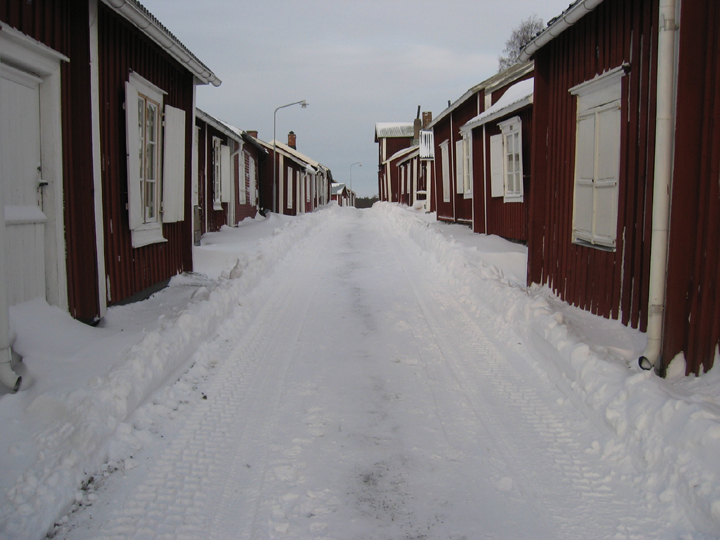
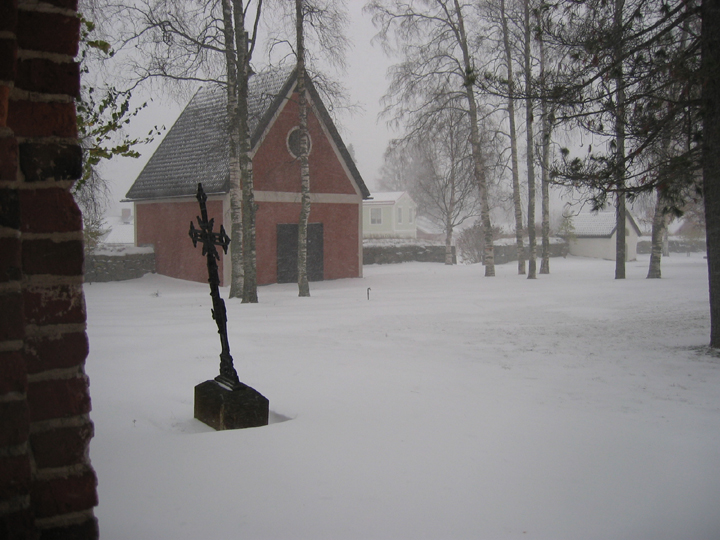
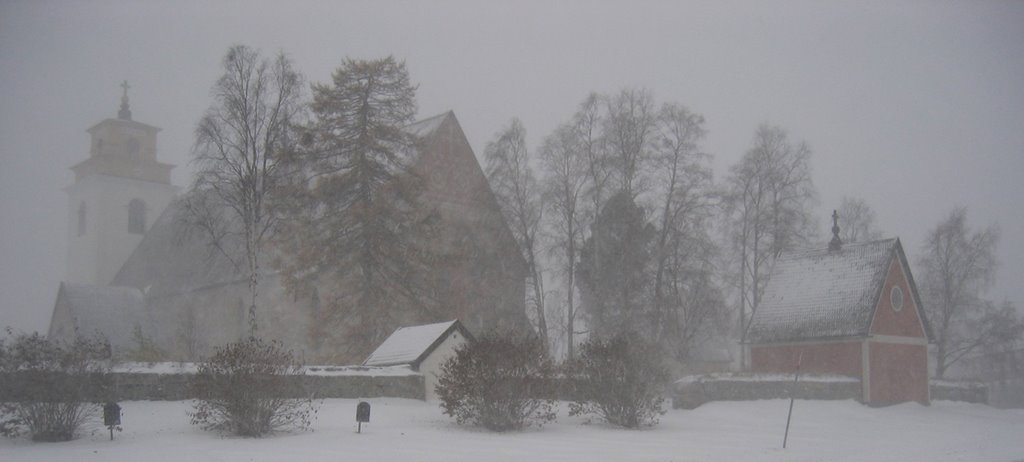
There were lots of cars and no sidewalks on the road I was to follow. The snow was ankle deep and I walked into a very strong wind. It was snowing so hard (follow the link to video) that I almost walked right by Gammelstad! It appeared out of nowhere and I turned onto a narrow lane and walked up a hill packed with little red cottages. It seemed as if most of the wooden buildings had all huddled together behind the more orderly ones fronting the street. They all had white trim and shutters and lace curtains were hung in the windows. Most had large stones for front steps. A huge old stone church and a big white belltower sat on top of the hill. Except for an occasional passing car, there wasn’t a soul in sight. The church was locked up and the tourist office was closed along with all of the shops and cafés. Further evidence of my singular brilliance. I took pictures, mostly of the blowing snow, until the next bus came.
As the day progressed the storm just seemed to grow and my attempts to wander Luleå were severely hampered. I gave in and returned to my room, where the snow was now a quarter of the way up the window. The storm blew all night but the sky was clear when I woke up this morning and so I decided to go back to take some more pictures and sketch before leaving town. A bus bound for the hospital, via Gammelstad came ten minutes before the No 9 that I had taken yesterday. The driver didn’t speak English but nodded when I said Gammelstad so I paid her and sat down. This time I wouldn’t get off until I saw those little red cottages. The bus wound through neighborhoods where all the houses were either yellow or red, past two lakes and finally stopped in front of an enormous building covered by a glass roof. Everyone got off and the driver turned and just looked at me. We were at the end of the line and apparently I had missed my stop. Could getting to Gammelstad really be this much of a challenge? I gathered my things and stood up and she tried to explain to me that another bus would come in three minutes and to get off at ‘Centrum’. I told her I understood and turned to get off the bus but she told me to sit down. In three minutes we were back on the road.
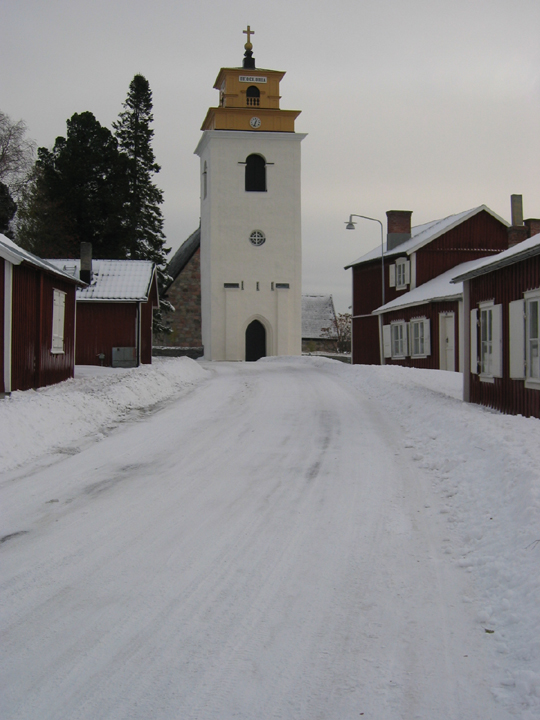
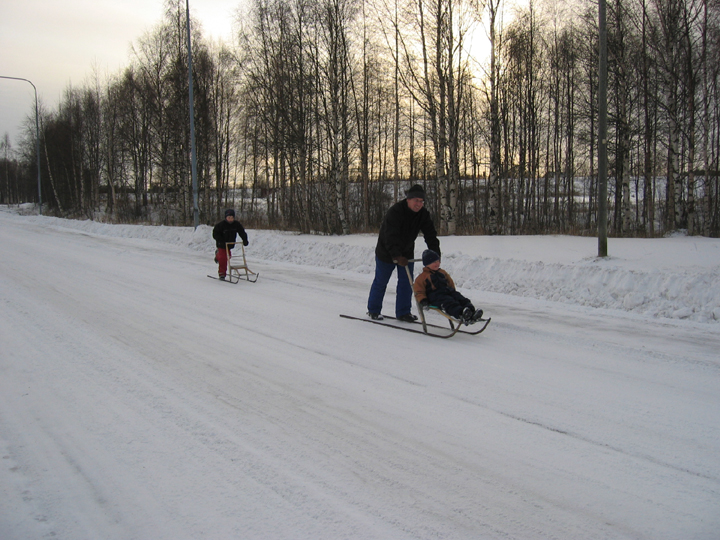
‘Centrum’ came, and I got off the bus. I knew where I was from the day before and I walked toward the church on the hill. I passed a man with two children on delicate foot sleds and they smiled at me as I took their picture. The town was quiet and nestled in yesterday’s snow and I wandered up and down the tiny streets and photographed the winding passageways between the buildings. The church, even in a city would have been massive and imposing but at the top of the hill in this Lilliputian village its presence was exaggerated. A family was gathering there for what looked like a christening and so I was able to get a glimpse inside. A single bay of white plastered walls terminated in a beautifully painted apse. It was a very reduced gothic of ribbed vaults and pointed arches and uncharacteristically thick walls. It would have been the perfect place to wait out yesterday's storm. I circled the entire village and then stopped next to Margarta’s Wardshus to sketch the buildings that followed the main road as it wound its way out of town. Getting there had taken a great deal of doing and as long as the weather held I was in no hurry to get back on the bus.
27 October 2006
Välkomnande till Sverige!
27 October, 2006 ~ Luleå, Sweden

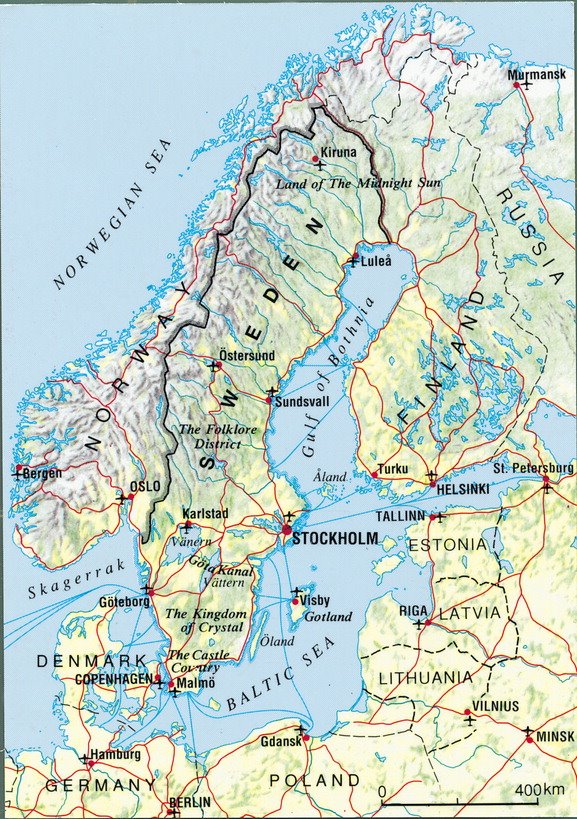
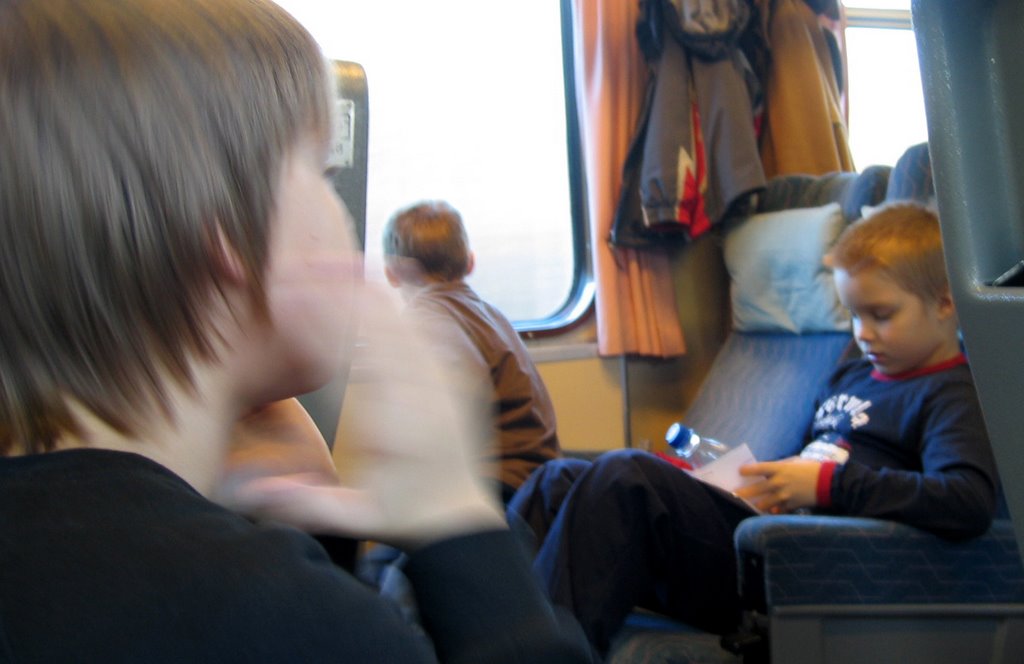
I've come to Sweden to look at and document the work of Sigurd Lewerentz. Yesterday I traveled from Helsinki to Kemi by train. I left early in the morning and chatted with a friendly woman until Tampere where I changed trains and continued on to Oulu. Frost quickly turned to snow as I watched forests and trains full of logs go by. At almose every station there was a beautiful brick semi-circular roundhouse. Each with a wooden platform in front to rotate the trains and send them from the tracks into the sheds. I sat next to a boy of about 10 who was traveling with his younger twin brothers. From time to time he would ask me something and I would have to remind him that I didn’t speak Finnish. He asked if I was Swedish because I was reading Lonely Planet’s Sweden. I told him I was “amerikkalainen” which he promptly reported to his two brothers. With what little Finnish I know and the "american" he knew we managed to have a staccato conversation punctuated my repeated admission “Mina en ymmärtää.” and his giggles. When he saw me reading Moominsummer Madness ‘in american’ he told me they had that book in Finland too. He was delightful company. Any hesitation or fear to speak another language completely disappears with children and I was reminded of a wonderful conversation I had with some Belgian children last spring in Normandy. They were curious about what I was sketching and told me about the cours de dessiner they had taken in school.


I reached Kemi at three and walked a block from the train station to the bus station. The big clock on the wall had no hands and made me feel like I was very far away. I wrote a postcard while I waited for the bus that would take me to the border. I walked ½ kilometer right into Sweden and onto another bus bound for Umeå. It was 14:00 local time and the sun was already giving up the day. Three more hours and I was finally in Luleå. I collected some Swedish kronor and some dinner and went to find the bus to the hostel. Vandrarhem Kronan, the hostel, was the last stop and I got off and walked into the woods. It was at the end of a lane and lights were lit in several of the windows. I rang at the door...I rang again....and again. Nothing. There were two phone numbers on the door and after some fumbling through my guide book for country and city codes I called various combinations of both but to no avail. My Finnish phone does not work here in Sweden. Eventually my disbelief turned to acceptance and I walked back to the bus stop. The bus had just gone and the next one wasn’t for an hour. Taxis didn’t seem to make it out this far and I debated walking back to town but decided it would be worse to be lost than to wait it out. I bundled up and paced up and down the snowcovered sidewalk to keep my feet warm. I passed the time talking to myself, half laughing and half scared by how vulnerable I suddenly felt. Waiting in subfreezing temperatures for over an hour feels like a real accomplishment. The bus finally came and I climbed on to warm up. Back in town, I walked to a hotel recommended by the guide book and rang the bell. When a girl finally answered she told me that reception was closed for the evening and so they wouldn’t take any more guests. It was just a little after 21:00. So off I went to find another hotel and I took the first room I could find. It is expensive and tiny but looks out over snowy rooftops and has the most wonderful bed. I had a glass of wine and checked e-mail before going to sleep. A message was waiting for me from the hostel. It said “Welcome!”
The train to Gävle is booked until tomorrow, except for the sleeping cars which cost more than this little room, so I’ll stay on another day and go see Gammelstad. It’s a 16th Century church town, built where Luleå used to be when the sea was 10 meters higher. Uplift from the receding glacier meant that the town had to move to stay next to the sea. Gammelstad is a UNESCO World Heritage Site with over 400 little cottages. At the train station I was warned that a big storm was coming. It’s already snowing and the wind has kicked up but I’m assured that I can seek shelter at Margaretas Wärdshus, a cozy 200 year old café next to the church. It sounds perfect. Wish me luck.
I've come to Sweden to look at and document the work of Sigurd Lewerentz. Yesterday I traveled from Helsinki to Kemi by train. I left early in the morning and chatted with a friendly woman until Tampere where I changed trains and continued on to Oulu. Frost quickly turned to snow as I watched forests and trains full of logs go by. At almose every station there was a beautiful brick semi-circular roundhouse. Each with a wooden platform in front to rotate the trains and send them from the tracks into the sheds. I sat next to a boy of about 10 who was traveling with his younger twin brothers. From time to time he would ask me something and I would have to remind him that I didn’t speak Finnish. He asked if I was Swedish because I was reading Lonely Planet’s Sweden. I told him I was “amerikkalainen” which he promptly reported to his two brothers. With what little Finnish I know and the "american" he knew we managed to have a staccato conversation punctuated my repeated admission “Mina en ymmärtää.” and his giggles. When he saw me reading Moominsummer Madness ‘in american’ he told me they had that book in Finland too. He was delightful company. Any hesitation or fear to speak another language completely disappears with children and I was reminded of a wonderful conversation I had with some Belgian children last spring in Normandy. They were curious about what I was sketching and told me about the cours de dessiner they had taken in school.
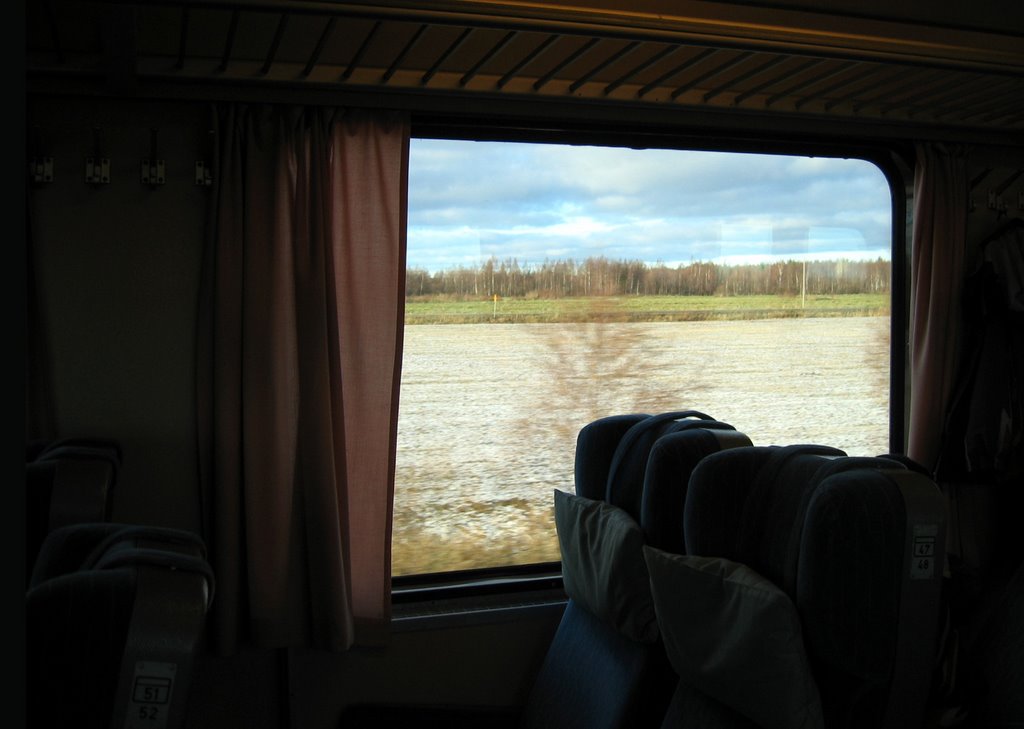
I reached Kemi at three and walked a block from the train station to the bus station. The big clock on the wall had no hands and made me feel like I was very far away. I wrote a postcard while I waited for the bus that would take me to the border. I walked ½ kilometer right into Sweden and onto another bus bound for Umeå. It was 14:00 local time and the sun was already giving up the day. Three more hours and I was finally in Luleå. I collected some Swedish kronor and some dinner and went to find the bus to the hostel. Vandrarhem Kronan, the hostel, was the last stop and I got off and walked into the woods. It was at the end of a lane and lights were lit in several of the windows. I rang at the door...I rang again....and again. Nothing. There were two phone numbers on the door and after some fumbling through my guide book for country and city codes I called various combinations of both but to no avail. My Finnish phone does not work here in Sweden. Eventually my disbelief turned to acceptance and I walked back to the bus stop. The bus had just gone and the next one wasn’t for an hour. Taxis didn’t seem to make it out this far and I debated walking back to town but decided it would be worse to be lost than to wait it out. I bundled up and paced up and down the snowcovered sidewalk to keep my feet warm. I passed the time talking to myself, half laughing and half scared by how vulnerable I suddenly felt. Waiting in subfreezing temperatures for over an hour feels like a real accomplishment. The bus finally came and I climbed on to warm up. Back in town, I walked to a hotel recommended by the guide book and rang the bell. When a girl finally answered she told me that reception was closed for the evening and so they wouldn’t take any more guests. It was just a little after 21:00. So off I went to find another hotel and I took the first room I could find. It is expensive and tiny but looks out over snowy rooftops and has the most wonderful bed. I had a glass of wine and checked e-mail before going to sleep. A message was waiting for me from the hostel. It said “Welcome!”
The train to Gävle is booked until tomorrow, except for the sleeping cars which cost more than this little room, so I’ll stay on another day and go see Gammelstad. It’s a 16th Century church town, built where Luleå used to be when the sea was 10 meters higher. Uplift from the receding glacier meant that the town had to move to stay next to the sea. Gammelstad is a UNESCO World Heritage Site with over 400 little cottages. At the train station I was warned that a big storm was coming. It’s already snowing and the wind has kicked up but I’m assured that I can seek shelter at Margaretas Wärdshus, a cozy 200 year old café next to the church. It sounds perfect. Wish me luck.
07 October 2006
Purjelaivat
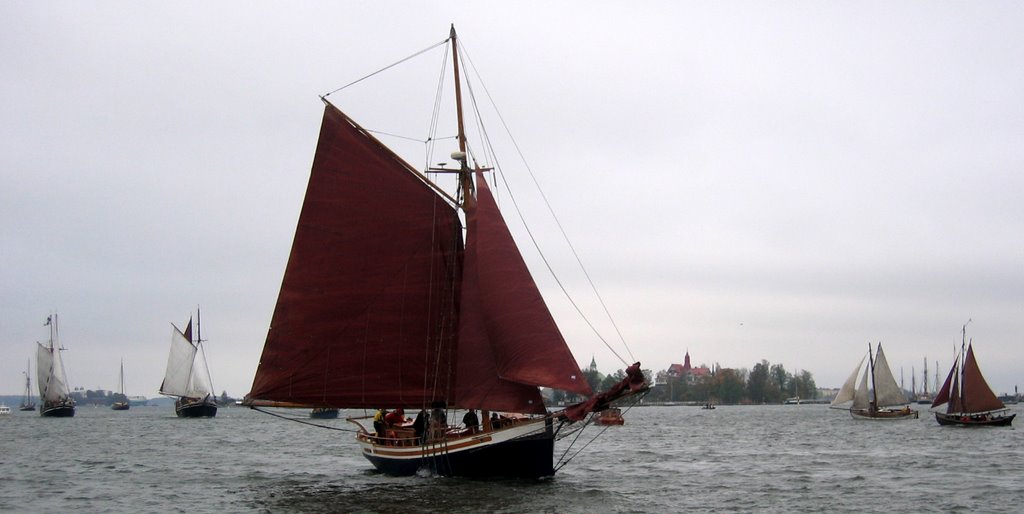
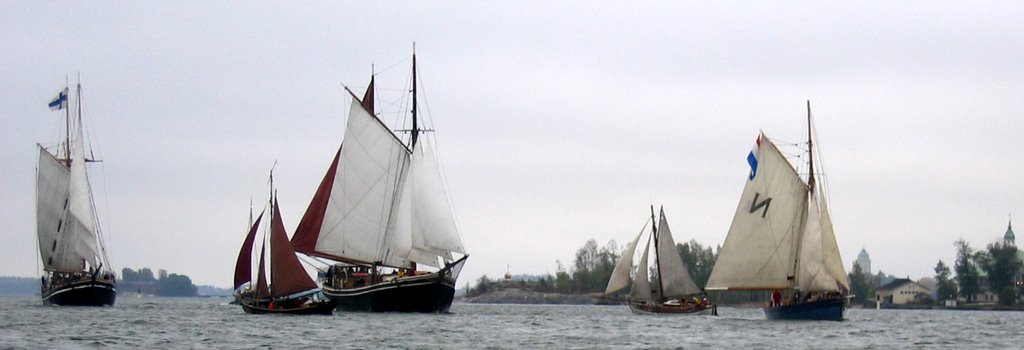
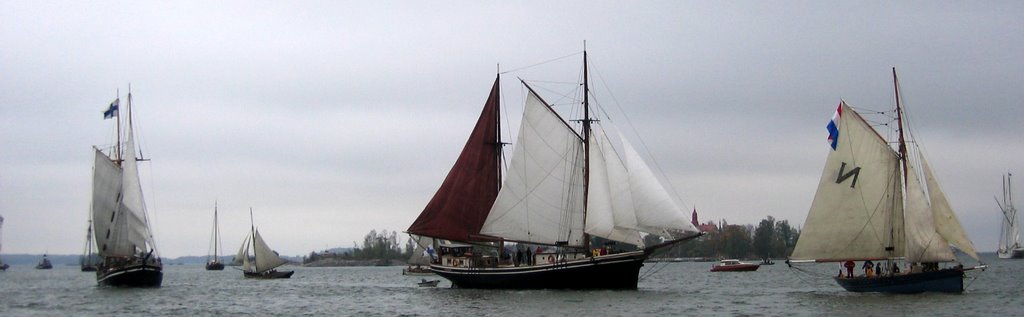
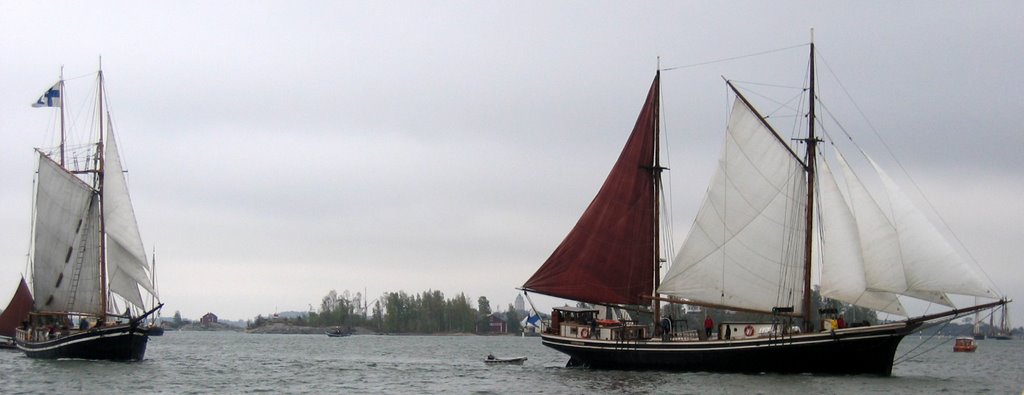
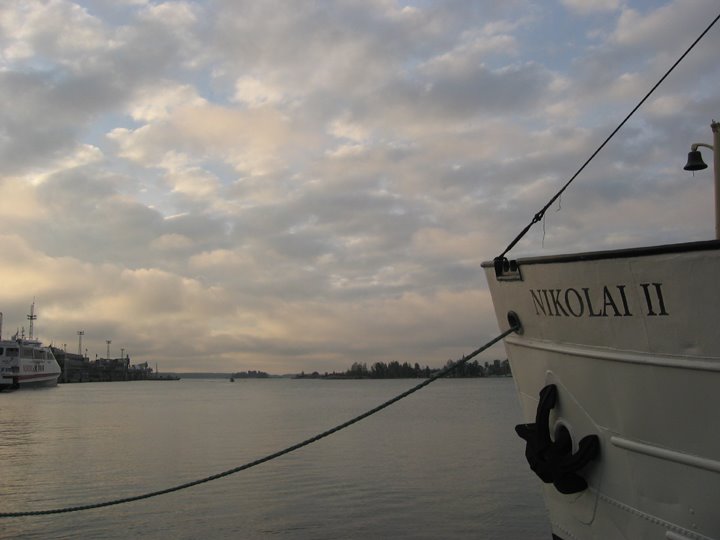
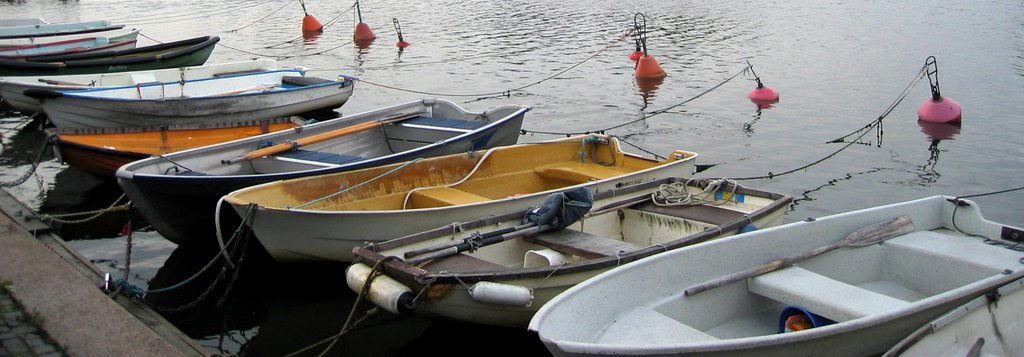
In search of cloudberries, I stopped at kauppatori on my way home this afternoon. Just as I arrived, an exquisite parade of sailing ships passed through Eteläsatama. They came and went in just a few minutes without making the slightest sound.




29 September 2006
Lupaava Esittely
A rather auspicious introduction to a young American man this morning led to the surprise opportunity to hear Peter Zumthor give a lecture this afternoon. The Finnish timber industry had chosen him for their annual ‘Spirit of Nature’ prize and he had come to
28 September 2006
27 September 2006

Muminat
Thursday September 28, 2006
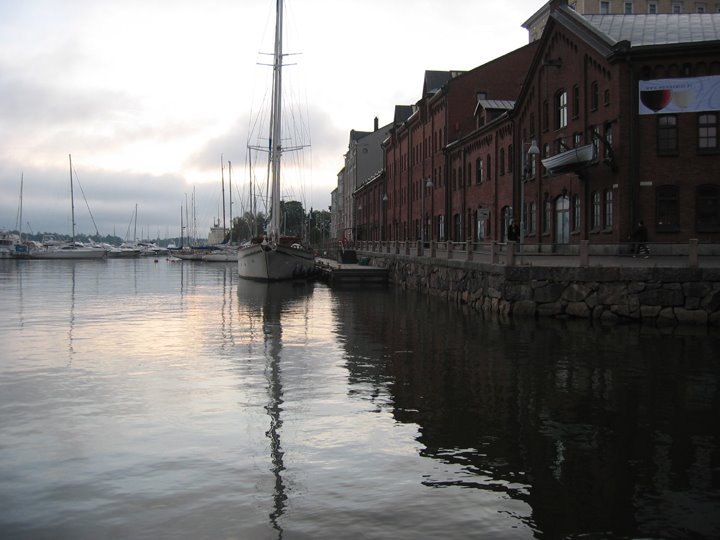
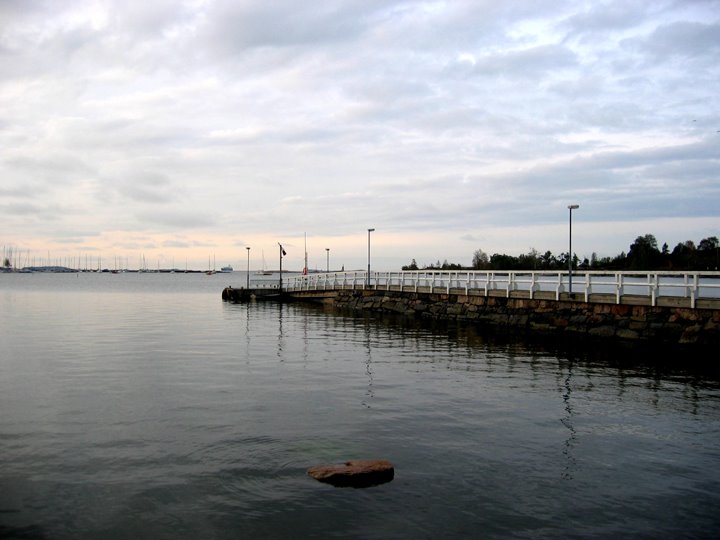
The sun has grown heavy with age and prefers most days now to travel across the sky instead of rising into it. More frequent are its failures to burn through the haze, which it has turned a melancholy shade of violet. In skies swollen with resignation it has become a daytime moon. The ghosts of sailboats hover in thick mists that linger on the sea. And once expectant gazes have hushed to sleepy reveries.
Monday September 25, 2006
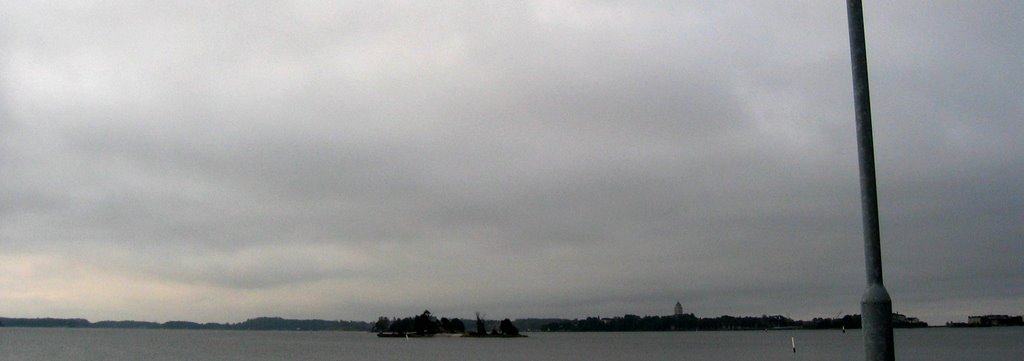
What is the horizon? The furthest point visible at which the sky meets the earth or the sea. What is the furthest point when one is inside? What are the limits of the apprehendable from within a room, a house or a city?
That most fragmented space, in flight when one loses sight of the earth and the horizon consists of the sky upon itself, the nowhereness matched by the jerking of time moving forward and backward simultaneously. Yet somehow from this ambiguity one emerges somewhere that is fixed to the earth and to a constant clock. It’s like the non-space of the cinema where one goes to leave their bodies and its horizons behind for a few moments—so completely apart form this world for the sake of another.
I’ve always found the moments just after a film has ended to be some of the most excruciating. The transition is a shock and one is thrust out and back without the chance for a proper good-bye. And then left with the task of reconciling this reality to that one with out the least understanding of how to begin.
One can photograph Paris in black and white without sacrificing any of its substance and perhaps make an even truer representation of the city. Not so Helsinki. This city of pastel houses under crystal blue skies in the shimmering water begs to be captured in color. She wears grey with the steely solemnity of a diplomat; brooding and serious but always with a luminous horizon. Her sparkling blues and sunny yellows are always crisp and fresh. Her greens are of neither sea nor earth, but of legends read from painted books in wooden rooms by northern light. From the forests come her reds, where sanguine berries grow in brambles under huge and rusty trees. Her white is almost silver descending from the leaves and bark of birches that dance over fecund bogs of earthen black that seem to swallow up the light.
The sun has grown heavy with age and prefers most days now to travel across the sky instead of rising into it. More frequent are its failures to burn through the haze, which it has turned a melancholy shade of violet. In skies swollen with resignation it has become a daytime moon. The ghosts of sailboats hover in thick mists that linger on the sea. And once expectant gazes have hushed to sleepy reveries.
Monday September 25, 2006
What is the horizon? The furthest point visible at which the sky meets the earth or the sea. What is the furthest point when one is inside? What are the limits of the apprehendable from within a room, a house or a city?
That most fragmented space, in flight when one loses sight of the earth and the horizon consists of the sky upon itself, the nowhereness matched by the jerking of time moving forward and backward simultaneously. Yet somehow from this ambiguity one emerges somewhere that is fixed to the earth and to a constant clock. It’s like the non-space of the cinema where one goes to leave their bodies and its horizons behind for a few moments—so completely apart form this world for the sake of another.
I’ve always found the moments just after a film has ended to be some of the most excruciating. The transition is a shock and one is thrust out and back without the chance for a proper good-bye. And then left with the task of reconciling this reality to that one with out the least understanding of how to begin.
Monday September 18, 2006
In America we are collectively so self-conscious that the only acceptable attitude is apathy. Enthusiasm is too risky. It’s like being the only one dressed up on Halloween.
One can photograph Paris in black and white without sacrificing any of its substance and perhaps make an even truer representation of the city. Not so Helsinki. This city of pastel houses under crystal blue skies in the shimmering water begs to be captured in color. She wears grey with the steely solemnity of a diplomat; brooding and serious but always with a luminous horizon. Her sparkling blues and sunny yellows are always crisp and fresh. Her greens are of neither sea nor earth, but of legends read from painted books in wooden rooms by northern light. From the forests come her reds, where sanguine berries grow in brambles under huge and rusty trees. Her white is almost silver descending from the leaves and bark of birches that dance over fecund bogs of earthen black that seem to swallow up the light.
13 September 2006
Subscribe to:
Posts (Atom)